
Motors & Drive Units
eBike Motor Repair
Near You
Before you price a $600 drive unit, find out whether it's a $15 sensor. Diagnose the fault, compare real repair costs, and find a shop across 3,134 US cities.
Diagnose it first
What is the motor doing?
Most "dead motor" calls turn out to be sensors, connectors, or controllers — the cheap parts around the motor, not the motor. Find your symptom and check the simple things first.
Motor cuts out under load
Thermal shutdown from sustained hills at high assist, a loose phase wire working against vibration, or a speed sensor dropping signal so the controller thinks you stopped pedalling.
Check first
Does it come back after a cool-down? Thermal. Cuts out instantly regardless of temperature? Suspect connectors and the cadence sensor gap first.
$0 sensor fix · $75–$200 diagnosis if not
Grinding or clicking noises
Mid-drive: nylon gear wear inside the drive unit — it eventually strips. Hub motor: freewheel pawls or clutch wear, often heard as ticking when coasting.
Check first
Note when it happens: under pedal load points mid-drive internals; coasting noise points hub freewheel. Both are bench jobs.
$150–$400 gear/pawl service vs $500+ new unit
No assist at all, bike otherwise fine
Blade fuse blown in the controller line, a killed speed sensor magnet, or the motor connector worked loose — rarely an actually dead motor.
Check first
Check the simplest things in order: fuse, connector seating, sensor magnet still on the spoke, error codes on the display.
$5–$30 parts if it is fuse/sensor/connector
Error code on the display
Brand-specific tables: a Bosch code means something different from the same number on a Bafang. Motor-related codes usually mean Hall-sensor or phase-wire faults.
Check first
Look the code up by system, not number. Power-cycle and re-seat every reachable connector before booking — this clears a third of motor codes.
$50–$120 diagnostic, often credited against repair
Jerky or pulsing assistance
Misaligned cadence or torque sensor, a failing Hall sensor inside a hub motor, or water ingress in a connector after wet riding.
Check first
Re-check the chainstay sensor gap (2–3 mm) and look for corroded connectors before assuming the motor itself.
$20–$60 external fixes · $100–$300 internal
Burning smell or hot casing
Overloaded windings or a shorting phase connection. A motor too hot to rest your hand on after normal riding is signalling real damage.
Check first
Stop riding it. Sustained overheating degrades winding insulation permanently and can take the controller with it.
$100–$300 diagnosis · replacement likely
Battery symptoms instead? Start with the battery triage — charging faults imitate motor problems surprisingly often.
Not sure which motor you have? Hub vs mid-drive explained — the difference decides what can be fixed and by whom.
Know your system
Hub and mid-drive motors fail differently
Which motor you own decides who can legally and practically open it. That is worth knowing before the phone call, because it changes both the quote and the turnaround.
Hub motor (geared)
- Typical failures
- Freewheel/clutch wear, Hall sensors, axle washers shearing from torque arms left loose
- Who can fix it
- Moderately — generic parts exist, and competent independent shops rebuild many geared hubs
- Typical money
- $80–$250 internal repair · $200–$500 replacement motor
Hub motor (direct drive)
- Typical failures
- Fewer wear parts; failures are windings, bearings, or water ingress
- Who can fix it
- Poorly — heavy, sealed, and often cheaper to replace than rebuild
- Typical money
- $250–$600 replacement is the usual outcome
Mid-drive (Bosch/Shimano/Brose/Yamaha)
- Typical failures
- Nylon gear and bearing wear; electronics are reliable but proprietary
- Who can fix it
- Locked to the manufacturer network for warranty; some independents handle out-of-warranty units
- Typical money
- $150–$400 gear/bearing service · $500–$900 reconditioned unit
Mid-drive (budget DTC brands)
- Typical failures
- Controller and Hall sensor failures dominate; gears are metal but connectors are cheap
- Who can fix it
- Variable — parts come from the manufacturer direct, quality varies wildly
- Typical money
- $40–$120 controller swap · $150–$400 full motor
2026 pricing
What eBike motor repairs cost
Typical US independent-shop rates. Authorised dealers for Bosch-class systems charge at the top; generic hub-motor work sits at the bottom.
| Service | What's included | Typical cost |
|---|---|---|
| Motor diagnostic | Error-code read, Hall sensor test, phase and resistance checks | $50 – $120 |
| Speed/torque sensor repair | Sensor replacement, gap setting, wiring run to the display | $30 – $90 |
| Controller replacement | Matching voltage/amperage controller, harness adapters where needed | $60 – $200 fitted |
| Geared hub rebuild | Clutch, nylon gears, and seals replaced in a hub motor | $80 – $250 |
| Mid-drive unit service | Gear set and bearings on serviceable systems (brand-dependent) | $150 – $400 |
| Drive unit replacement | New or reconditioned motor fitted and configured | $200 – $900 |
Ask for the diagnostic result in writing before approving anything over $200 — "the motor's gone" deserves a specific failed part named.
The directory
Find motor service in your state
Pick your state to compare local shops, then ask the two questions that decide everything: can they read your system's fault codes, and do they file warranty claims.
eBike specialists
Shops built around electric bikes
Electric bikes are these shops' core business, so they see motor faults weekly and know their way around a diagnostic screen. One per state, ranked by customer rating.
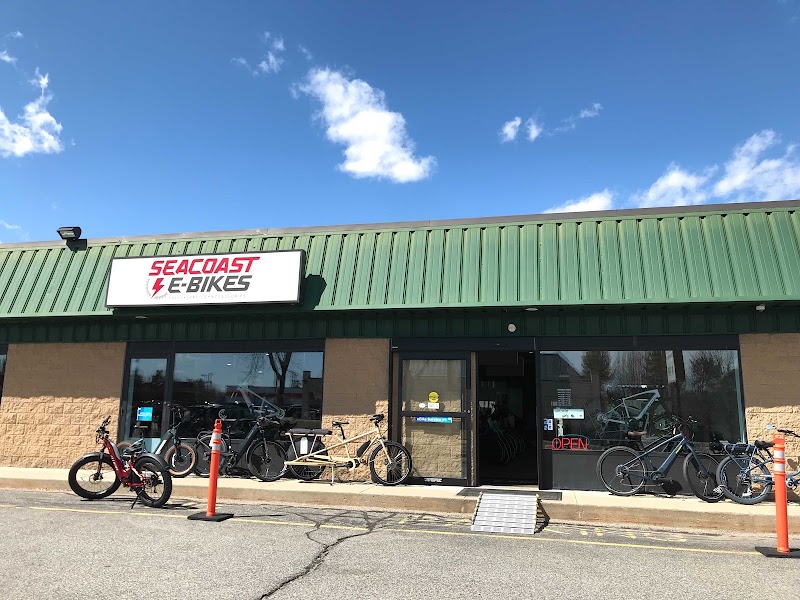 5.0 (322)
 Seacoast E-Bikes
Newington, NH
View shop details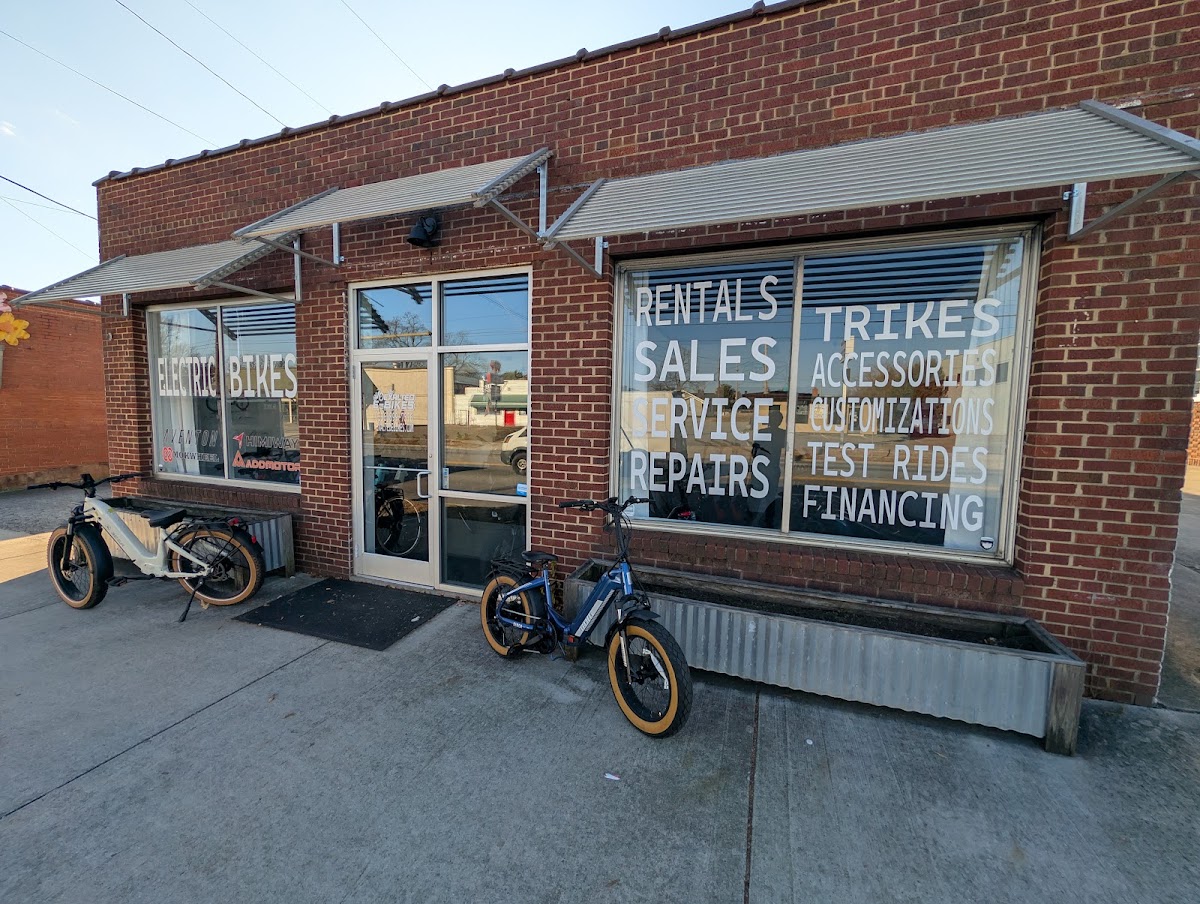 5.0 (307)
 Exalted E-Bikes
High Point, NC
View shop details 5.0 (298)
 Montana E-Bikes & More
Whitefish, MT
View shop details 5.0 (283)
 Manitou E-bike Co
Colorado Springs, CO
View shop details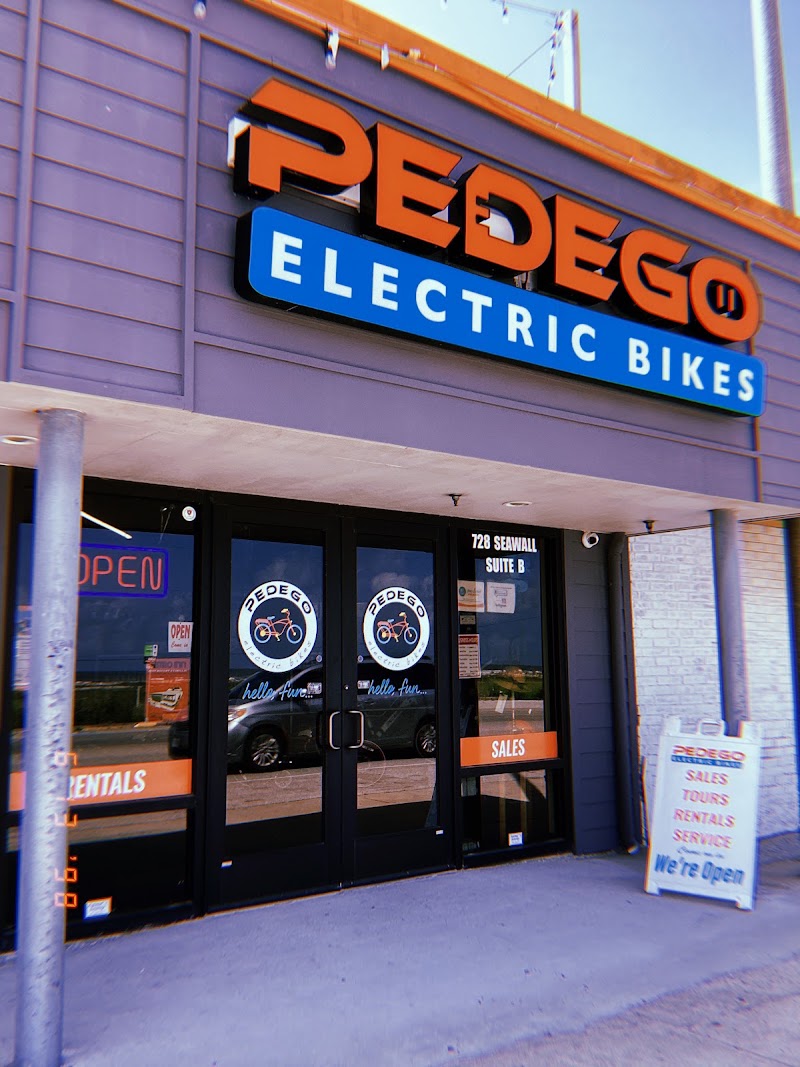 5.0 (254)
 Pedego Electric Bikes Galveston
Galveston, TX
View shop details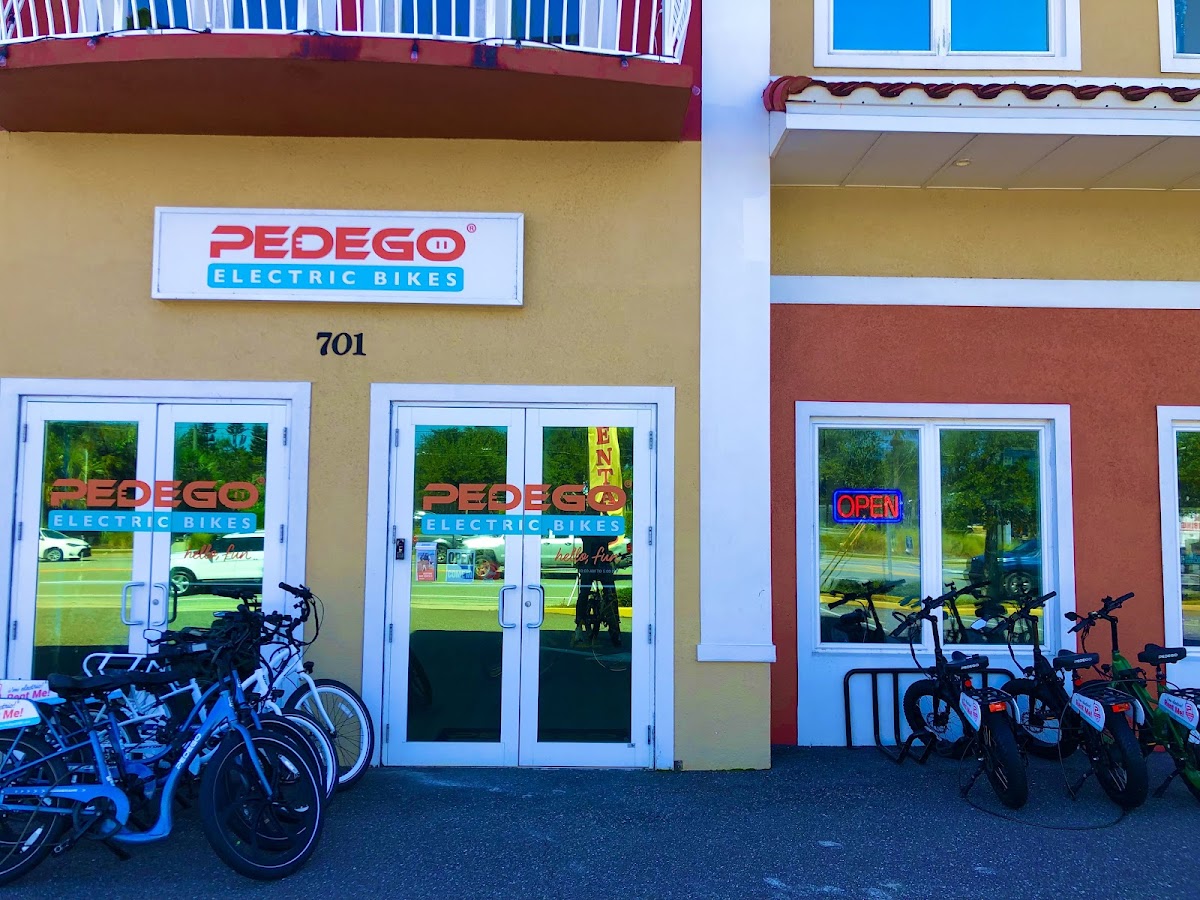 5.0 (236)
 Pedego Electric Bikes New Smyrna Beach
New Smyrna Beach, FL
View shop detailsFive questions to ask before you book
Motor work is where brand support matters most. A two-minute call avoids a wasted trip with a heavy bike.
- 1 Do you work on my motor brand, or only the ones you sell?
- 2 Can you read fault codes for Bosch / Shimano / Brose / Bafang systems?
- 3 Is my motor still under warranty — and can you file the claim?
- 4 Do you fit reconditioned drive units, and what guarantee comes with them?
- 5 If the motor needs replacing, what happens to my existing battery warranty?
Common questions
eBike motor repair FAQ
How much does ebike motor repair cost?
A diagnostic runs $50–$120 and is often waived or credited if you approve the repair. External fixes — sensors, connectors, controllers — land between $30 and $200 fitted. Internal repairs start around $80 for a geared hub rebuild and $150 for mid-drive gearing, while a full drive-unit replacement runs $200–$900 depending on the system.
Can a regular bike shop repair an ebike motor?
Mechanically inclined shops can service generic hub motors and budget-brand systems. Proprietary mid-drives are different: Bosch, Shimano, and Brose lock diagnostics and firmware to authorised dealers, so out-of-warranty internal work depends on dealer status. Call ahead with your exact motor model — that single question saves the trip.
Is it worth repairing an ebike motor or should I replace it?
Compare the quote against a reconditioned unit plus fitting. Sensor, connector, and controller repairs almost always beat replacement. On geared hubs, a $150 rebuild beats a $400 motor. On proprietary mid-drives out of warranty, a reconditioned exchange unit ($500–$700 fitted) frequently beats repairing the original.
What are the signs of a failing ebike hub motor?
Ticking or grinding when coasting (clutch or gear wear), cutting out under load then returning when cool, jerky assistance from failing Hall sensors, and repeated blown fuses. Any of these alongside an error code pointing at the motor means book a diagnostic rather than waiting for total failure.
How long does an ebike motor last?
A well-kept mid-drive typically passes 10,000 miles before its nylon gears need service, and hub motors routinely exceed that since they spin independently of the drivetrain. Heat is the main killer: sustained full-throttle hill climbs, overloading with cargo, and riding with a dragging brake all shorten motor life considerably.
Why does my ebike motor cut out when I pedal harder?
Usually thermal protection — the controller sheds load when temperatures pass a threshold, and assistance returns once it cools. If cut-outs happen instantly even when cold, suspect a loose phase connector, a dying speed sensor, or a controller fault instead. The pattern (heat-related versus instant) tells the technician most of what they need to know.
Where can I find ebike motor repair near me?
Use the eBikeLocal directory to search 7,984 eBike shops across 3,134 US cities. Filter for shops carrying or servicing your motor brand, and ask two questions on the phone: can you read my system's fault codes, and do you file warranty claims for it.
Keep reading
Related guides & services
Hub Motor vs Mid-Drive
How each design wears, what it costs to fix, and which suits your riding.
Read guide RepaireBike Repair Near Me
Symptom triage and pricing for everything outside the motor.
Read guide RepairBattery Repair & Replacement
The other expensive component — diagnose before you replace.
Read guide LawseBike Laws by State
Class rules matter after a motor swap — keep the bike legal.
Read guide