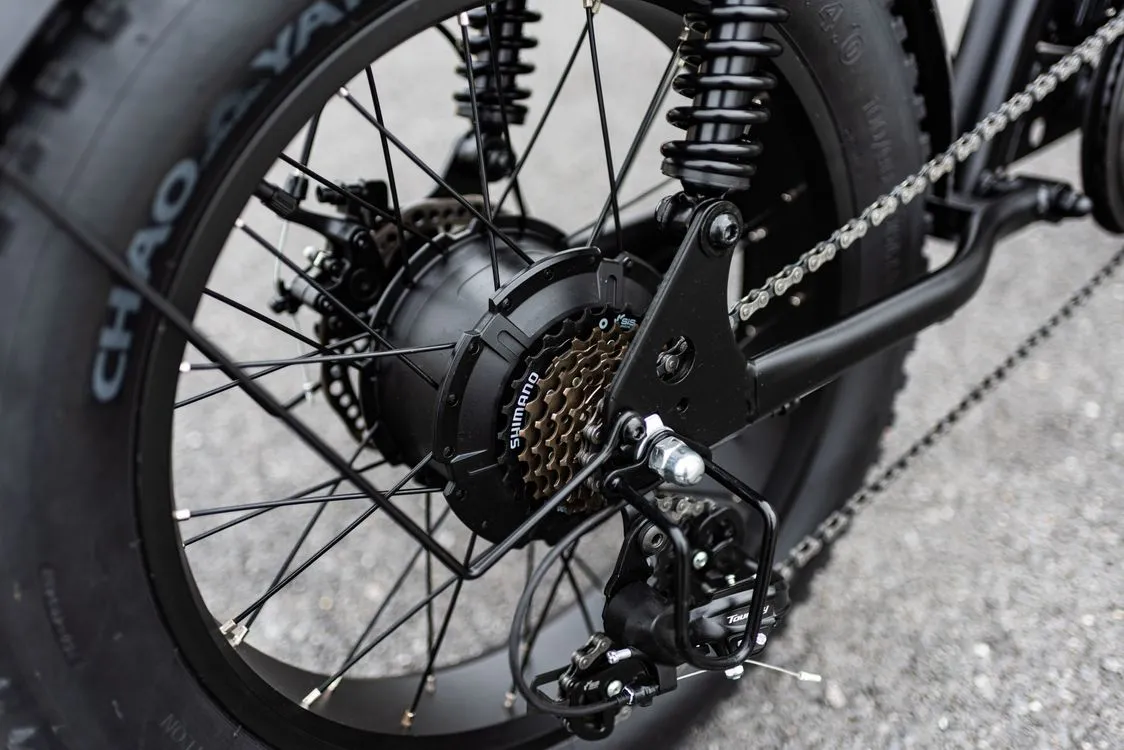
The motor is the heart of any eBike - and the two dominant types, hub motors and mid-drive motors, have meaningful differences in how they ride, what they cost, and what kind of terrain they handle best.
This guide cuts through the marketing and explains what actually matters when choosing between them.
What Is a Hub Motor?
A hub motor is built directly into the wheel hub - typically the rear wheel, though front-hub designs exist. When the motor activates, it drives the wheel directly, independent of the bike’s gears.
Common hub motor eBike brands: Aventon, Rad Power Bikes, Lectric, Velotric, Ride1Up, Trek Verve+ (entry), Specialized Como SL (some models)
Typical specifications:
- 250W–750W (most US legal eBikes are 750W maximum)
- Torque: 40–80 Nm
- Power delivery: smooth and linear
What Is a Mid-Drive Motor?
A mid-drive motor is mounted at the bike’s bottom bracket - the center of the frame where the pedals attach. Instead of driving the wheel directly, it drives the chainring, which means power flows through the bike’s derailleur and cassette.
Common mid-drive motor brands: Bosch, Shimano EP8/E7000, Brose, Yamaha, Fazua (lightweight)
Common eBike brands using mid-drive: Trek (Bosch), Specialized Turbo (custom Specialized motor), Giant (Yamaha/SyncDrive), Gazelle, Bulls, Haibike
Typical specifications:
- 250W–750W nominal (peak output often 500W–850W)
- Torque: 50–90 Nm (Bosch Performance CX: 85 Nm)
- Power delivery: responds to pedal cadence and torque sensors
Hub Motor vs Mid-Drive: Head-to-Head Comparison
Performance on Hills
Mid-drive wins on sustained climbs.
Because the motor works through the gears, you can shift to a lower gear before a steep section. The motor stays in its efficient power band while your gear ratio handles the mechanical advantage. This is why mid-drives dominate mountain eBike applications.
A hub motor delivers the same torque output regardless of your gear selection. On long, steep climbs, this leads to overheating on underpowered systems and inefficient battery consumption.
For flat to moderately hilly terrain (most urban and suburban riding), a quality rear hub motor handles the job without issue.
Range and Efficiency
Mid-drive has a slight efficiency edge, but real-world differences are modest.
A mid-drive’s ability to use lower gears at lower speeds means the motor runs more efficiently across varying terrain. Manufacturers often claim 10–20% better range from comparable battery sizes.
In practice, the rider’s power output, terrain, assist level, and rider weight matter more than the motor type. A 500Wh hub motor eBike ridden conservatively will often outlast a 500Wh mid-drive ridden aggressively.
Ride Feel
Mid-drive feels more like a traditional bike. Hub motors deliver more obvious push.
Mid-drive motors - especially those with torque sensors (Bosch, Shimano) - respond proportionally to how hard you pedal. Hard pedal input = more assist; light pedaling = gentle assist. This “natural” feel is why cyclists who already ride traditional bikes often prefer mid-drives.
Cadence-sensor hub motors turn on/off based on whether the pedals are moving, which can produce a less nuanced boost. Better hub motor systems (and higher-end hub motors with torque sensing) have closed the gap significantly.
Weight and Balance
Hub motors are heavier at the wheel. Mid-drive keeps weight centered.
A rear hub motor adds 3–5 lbs to the rear axle, which affects handling, especially in off-road situations. Mid-drive motors mount low and centered in the frame - the same location as the rider’s center of gravity - producing better overall bike balance.
For road and commuter riding, wheel weight is a minor factor. For mountain biking and technical trail riding, centered weight makes a noticeable handling difference.
Maintenance and Repairability
Hub motors are lower maintenance. Mid-drives are more repair-friendly at the drivetrain level.
Hub motors are self-contained. A typical hub motor will outlast the rest of the bike with almost no maintenance - there are no gears inside to wear out (brushless designs). The downside: replacing a rear tube or tire involves working around motor wiring.
Mid-drive motors put additional stress on the chain, cassette, and derailleur because motor torque flows through them. Chains and cassettes wear faster on mid-drive eBikes - budget $100–$200/year for drivetrain consumables on frequently ridden bikes.
However, mid-drive bikes use standard rear wheels - flat tire? Swap it in minutes without touching any motor hardware.
Cost
Hub motors cost significantly less.
| Motor Type | Typical Price Range |
|---|---|
| Budget hub motor eBike | $800–$1,500 |
| Mid-range hub motor eBike | $1,500–$2,500 |
| Entry mid-drive eBike | $2,000–$3,000 |
| Premium mid-drive eBike (Bosch/Shimano) | $3,000–$8,000+ |
The price premium for mid-drive is real and significant. For most urban riders, a quality hub motor eBike provides excellent value.
Which Motor Type Should You Choose?
Choose a hub motor if you:
- Primarily ride on flat to gently rolling terrain
- Are budget-conscious (under $2,500)
- Prioritize low maintenance
- Use the bike for commuting, casual riding, or fitness on paved surfaces
- Don’t need to carry the bike up stairs or on transit regularly
Good hub motor eBikes: Aventon Pace 500.3, Rad Power RadCity 5 Plus, Lectric XP 3.0, Velotric Discover 2, Ride1Up Core-5
Choose a mid-drive if you:
- Regularly ride steep hills or mixed terrain
- Want a natural, cyclist-like ride feel
- Are buying a mountain or gravel eBike
- Plan to ride 1,000+ miles per year and want long-term efficiency
- Have the budget for a premium system
Good mid-drive eBikes: Trek Domane+ SLR (Fazua), Trek Rail 9.9 (Bosch), Specialized Turbo Levo (custom), Giant Trance E+ (Yamaha), Gazelle Ultimate C380 (Bosch)
A Note on Torque Sensors vs Cadence Sensors
Motor type isn’t the only variable - the pedal assist sensor also shapes the ride significantly.
- Torque sensor: Measures how hard you’re pedaling and scales assist proportionally. More natural, efficient, and responsive. Found on most mid-drives and higher-end hub motors.
- Cadence sensor: Detects whether the pedals are spinning and delivers a fixed assist level. More on/off feel. Common on budget hub motor eBikes.
When comparing hub motor eBikes, check whether the bike uses a torque sensor - it’s often a bigger ride quality factor than motor type alone.
Finding Local Dealers for Both Types
Both hub motor and mid-drive eBikes are available at local shops across the US. The advantage of buying locally is the ability to test ride both types back-to-back before committing - which is strongly recommended if you’re undecided.
Use our shop finder to locate dealers near you who carry the brands you’re comparing.